
Australia’s relationship with energy is shifting. For years, it was all about consistency: keeping the lights on, the machines running, and the economy moving. But that mindset is starting to change. Sustainability is becoming just as important as reliability.
Electricity prices are rising. Emissions targets are tightening. And businesses, especially those in remote or heavy-duty environments, still need dependable ways to stay powered. So how do we move forward?
There’s no single solution. But right now, the most practical path seems to be a combination of renewable power, diesel generators, and smart energy systems. It’s not perfect. It is, however, moving in the right direction.
Rethinking off-grid energy
In remote areas of Australia, grid power often isn’t available. Mine sites, farms, and construction projects rely on stand-alone power systems. Historically, that has meant diesel generators. They’re reliable and tough, but not exactly clean.
That’s starting to change. Solar is being used more widely. Battery storage has become more accessible. And diesel generators are still there, but they’re no longer doing all the work. Instead, they support renewable energy in hybrid setups that share the load.
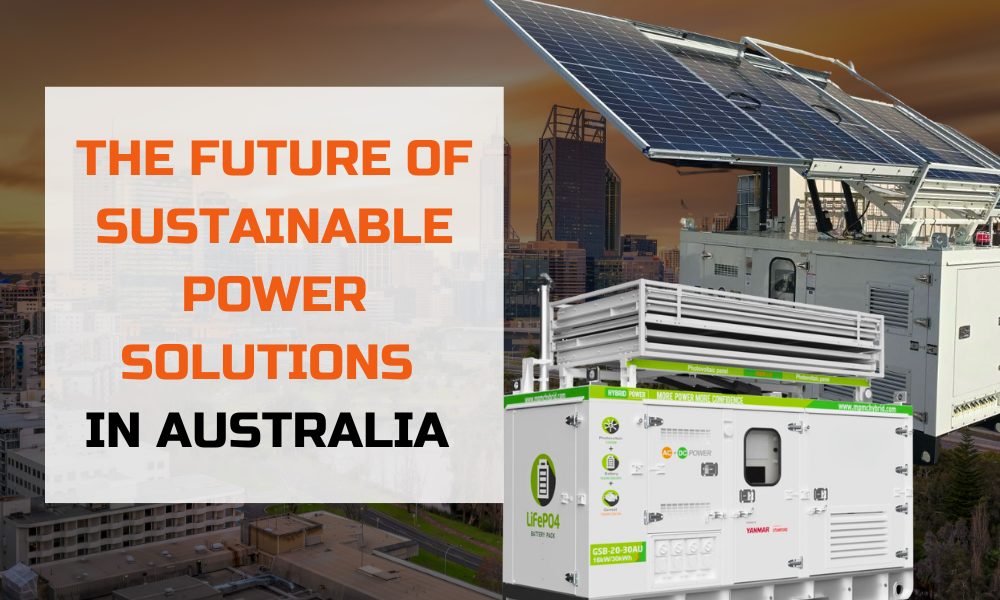
These hybrid systems use solar and battery power when available. The generator only runs when it’s needed. That means lower emissions, reduced fuel costs, and more efficient energy use. It’s a practical way to increase sustainability without sacrificing performance.
Hybrid power solutions becoming standard
Hybrid energy systems are now more than just a trend. They’re becoming the go-to for industries that need reliable and cost-effective power. A typical setup might include solar panels, batteries for storage, and a diesel generator as backup.
Modern control systems make these setups easy to manage. They automatically decide which source should supply power, depending on time of day, demand, and weather conditions. When the sun is shining, solar runs the show. When demand spikes, the generator steps in.
Generators in Perth and across WA are now often built to support these hybrid setups. They’re designed to connect seamlessly with solar infrastructure and smart monitoring systems. Businesses are no longer choosing between green and reliable. They’re getting both.
Energy storage takes centre stage
Battery technology is rapidly changing what’s possible in sustainable energy. Lithium-ion batteries are already common. Other technologies, like flow batteries, are being tested in larger installations.
Storage allows excess energy from solar or wind to be saved and used later. That means businesses can use solar power at night or during cloudy days without needing to run a generator. It brings more consistency to renewable energy, which has always been one of its challenges.
For remote and off-grid operations, battery systems reduce reliance on fuel deliveries. They also improve energy security and provide backup when the grid or generator fails. As the cost of storage continues to drop, adoption is expected to rise.
Heavy industry still needs high-output solutions
Not every site can rely on solar alone. Mining operations, processing facilities, and large-scale infrastructure projects have significant energy demands. Many run 24 hours a day. In these environments, power outages aren’t just inconvenient. They’re expensive.
Diesel generators still offer a level of output and reliability that renewables can’t yet match on their own. But even in these settings, the approach is changing. Generators are being used more selectively. Solar and batteries now pick up much of the base load.
Reducing generator runtime leads to lower fuel costs and fewer emissions. It also reduces wear and tear, extending the life of the equipment. The result is a smarter use of existing assets, not a complete replacement.
Government policies influence business decisions
Policy plays a key role in shaping the future of energy. Incentives for renewable installations, carbon reporting requirements, and emissions targets are all encouraging businesses to think differently about how they power their operations.
Many commercial buildings now include rooftop solar as standard. New industrial projects are being designed with microgrids and hybrid systems from day one. This kind of forward planning is becoming more common, driven by both regulation and cost savings.
Suppliers of power solutions in Australia are responding with more modular systems. Generators can now be delivered pre-configured for hybrid use. Monitoring and load management tools are part of the standard package. The technology is ready, and the market is catching up.
More complexity means more demand for support
As energy systems become more advanced, the need for skilled technical support grows. Electricians and technicians are no longer just maintaining engines. They need to understand batteries, solar systems, data analysis, and compliance requirements.
This shift has created a new kind of service model. Businesses want more than just a product. They want expert advice, ongoing monitoring, and fast response times when something goes wrong. In short, they want a partner, not just a supplier.
Support services now include system design, performance tracking, remote diagnostics, and regulatory documentation. It’s a more involved relationship, but it leads to better long-term outcomes.
What to expect from future power systems
Australia’s energy sector is changing, but not in a single direction. New technologies are being introduced, but they’re working alongside proven solutions, not replacing them completely.
Hydrogen-powered generators are under development. Synthetic fuels may become a viable alternative to diesel. Artificial intelligence is already being used to manage energy loads across large industrial sites.
What’s clear is that flexibility matters. The future of power will include renewables, diesel generators, batteries, and whatever comes next. Systems that can integrate these components smoothly will be in the strongest position.
Need a future-ready power solution?
Sustainability doesn’t mean giving up reliability. It just means thinking differently about how power is generated and used.
At GHASA, we work with clients across Perth, Kalgoorlie and Karratha to deliver diesel generators and hybrid power systems that meet real-world demands. Whether it’s for backup power, off-grid supply, or part of a sustainable energy strategy, our solutions are designed to perform.
Contact us on (08) 9359 1988 to speak to the team. Find out how GHASA can help power your operation with systems that are practical, efficient, and tough enough for WA conditions.