
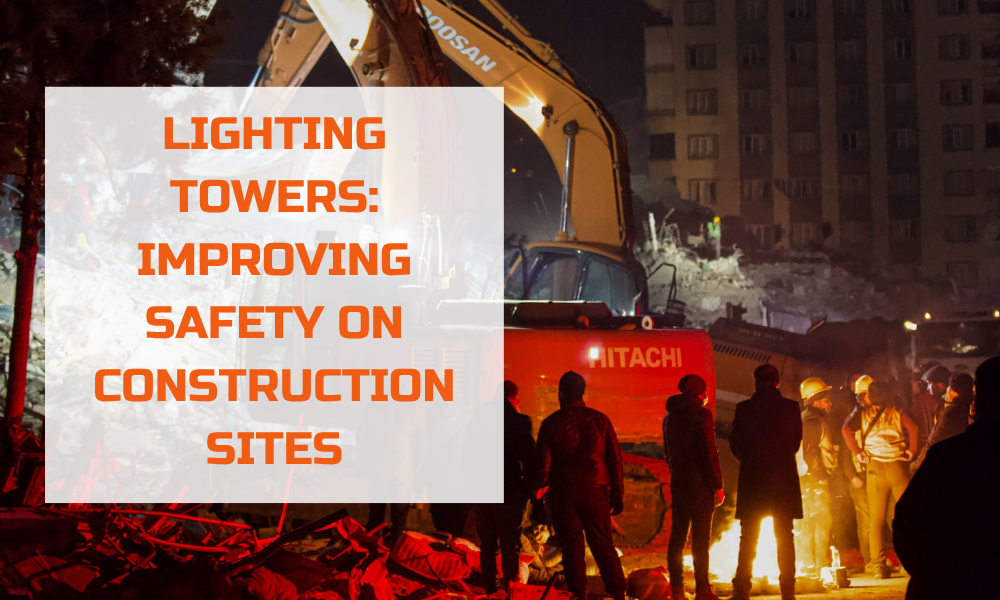
Construction projects often continue beyond daylight hours. Poor visibility can make it difficult for workers to identify hazards, operate machinery, and move safely around the site. Lighting towers provide a flexible way to improve illumination and support safer construction operations.
Why Construction Lighting Matters
Construction sites contain constantly changing hazards. Excavations, machinery, materials, temporary structures, and uneven surfaces can become more difficult to identify in low-light conditions.
Adequate lighting helps workers see their surroundings and perform tasks more effectively.
Mobile Lighting for Changing Work Areas
One of the main advantages of lighting towers is mobility. Construction projects change as work progresses, meaning lighting requirements can change from one stage to another.
Mobile towers can be relocated to different work zones as required. This flexibility makes them suitable for roadworks, building projects, infrastructure construction and emergency works.
Supporting Night-Time Construction
Some projects need to operate around the clock. Road construction, infrastructure upgrades and urgent repair work may be scheduled during evenings to reduce disruption to public traffic.
Lighting towers can provide illumination for machinery operators, tradespeople and supervisors working after dark.
Improving Visibility Around Machinery
Heavy machinery creates additional risks when visibility is limited. Operators need to see workers, equipment and obstacles around their work areas.
Strategically positioned lighting can improve visibility without relying entirely on fixed site lighting.
Lighting Access and Walkways
Lighting should not only focus on the main work area. Access routes, entry points, temporary stairs, storage areas, and walkways may also require adequate illumination.
A well-planned lighting arrangement helps workers move around the site with greater confidence.
Choosing the Right Lighting Tower
Businesses should consider factors such as illumination coverage, tower height, mobility, operating time, and power source.
The correct equipment depends on the size and layout of the site. Larger projects may require multiple lighting towers positioned strategically across different work zones.
Maintenance and Positioning
Lighting towers should be inspected regularly to ensure lamps, cables, power systems, and structural components remain in good condition.
Positioning is equally important. Towers should be placed where they provide useful coverage without creating unnecessary glare or interfering with vehicles and machinery.
Conclusion
Lighting towers are a practical addition to construction site safety planning. By improving visibility across work zones, access routes and machinery areas, they can help workers operate more safely and efficiently when natural light is limited.
FAQs
- What are lighting towers used for?
They provide temporary illumination for construction sites, roadworks, infrastructure projects and other outdoor work areas. - Can lighting towers be moved around a site?
Yes. Many models are designed to be mobile and can be relocated as work areas change. - Are lighting towers useful during daytime?
They can be useful in enclosed, shaded, or poorly illuminated areas even during daylight hours. - How many lighting towers does a construction site need?
The number depends on site size, layout, work activities, and required lighting coverage. - Do lighting towers require maintenance?
Yes. Regular inspections help ensure lighting, electrical, and mechanical components remain reliable.