
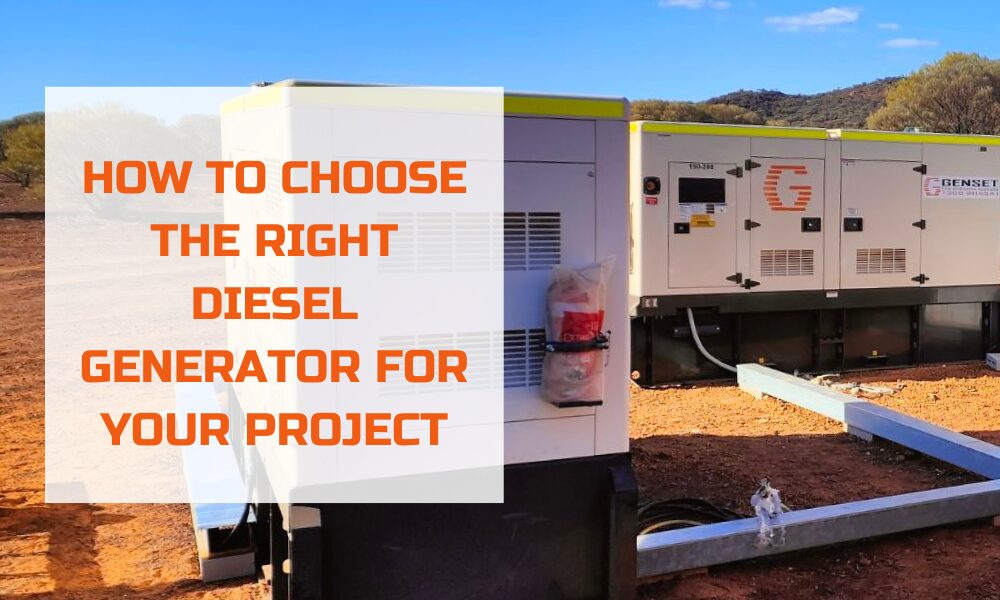
Choosing a generator sounds simple until you’re standing on site with a piece of equipment that’s either straining under the load or burning fuel it never needed to. Getting the specification right the first time saves money, downtime and a lot of headaches. Whether you’re powering a remote mine camp, a construction site or a commercial fit-out, the right unit keeps everything running without fuss. If you’re searching for a reliable Diesel Generator Perth businesses can depend on, here’s how to make a confident, well-informed choice.
Start with your power requirements
The single most important step is working out how much power you actually need. Every appliance, tool and system draws a certain wattage, and diesel-fueled generators are rated by both running (continuous) power and starting (peak) power. Motors, pumps and compressors can pull three to five times their running load the moment they switch on, so a generator that looks big enough on paper can trip if you overlook that surge.
Add up the running wattage of everything that will operate at once, then account for the greatest motor’s starting demand. It’s sensible to build in a buffer of around 20 to 25 per cent for future growth and to avoid running the set flat out. An undersized generator will overheat and wear prematurely, while a wildly oversized one wastes fuel and can suffer from “wet stacking”, where unburnt diesel builds up in the exhaust.
Single-phase or three-phase?
Your equipment decides this one. Most homes and small worksites run on single-phase power, while industrial machinery, larger HVAC systems and commercial premises typically need three-phase. Running three-phase gear from the wrong supply simply won’t work, so confirm your requirements before you commit. When in doubt, a supplier who knows the Perth market can quickly steer you to the correct configuration.
Match the generator to the environment
Western Australia throws plenty at your equipment, from coastal humidity in the metro area to dust and heat out in the Pilbara and Goldfields. Consider where the unit will live and work. A canopied, weatherproof enclosure protects the alternator and engine from the elements, while a sound-attenuated canopy keeps noise down on sites near homes, offices or hospitals. For remote projects, look at fuel tank capacity too — a larger built-in or bunded tank means fewer refuelling runs and longer unattended operation.
Prioritise fuel efficiency and run time
Diesel remains the workhorse fuel for good reason. Diesel-fueled generators are robust, fuel-efficient and built to run for long hours under heavy load, which is exactly what most industrial and construction projects demand. When comparing units, look at the litres-per-hour consumption at typical load, not just the headline power figure. A slightly more efficient engine can pay for itself over a long hire or ownership period, particularly on fuel-hungry remote sites.
Buy or hire?
There’s no universal answer here — it comes down to how long you need the power and how often you’ll use it. Short-term projects, seasonal peaks and one-off events usually suit hire, giving you a properly maintained unit without the capital outlay. Ongoing operations or permanent backup power often justify a purchase. A good local supplier will offer both, along with servicing, so you can scale up or down as your project evolves.
Don’t forget compliance and servicing
Any generator you install should meet Australian Standards and relevant emissions requirements, and be installed by a licensed electrician where hard-wiring is involved. Just as important is a servicing plan. Regular maintenance — oil, filters, coolant and load testing — keeps the set reliable and protects your warranty. Partnering with a Perth-based team that offers 24/7 support means help is close by if something does go wrong.
The bottom line
The right diesel generator is the one matched to your actual load, your phase requirements, your environment and your project timeline. Take the time to calculate your needs properly, factor in future growth, and lean on local expertise rather than guessing. Get those fundamentals right, and you’ll have dependable, cost-effective power for the life of your project.
If you’d like a hand sizing the ideal unit, the team at GHASA can help you compare options and request a tailored quote.
Frequently Asked Questions
- What size diesel generator do I need for my project?
It depends on your total running load plus the starting surge of your largest motor. Add up the wattage of everything running at once, include peak demand for motors and pumps, then add a 20–25% buffer. A Perth supplier can help you size it accurately so you avoid overloading or wasting fuel. - Are diesel-fueled generators better than petrol or gas?
For industrial, construction and remote applications, yes. Diesel-fueled generators are more fuel-efficient, more durable under heavy continuous loads and generally cheaper to run over time, which is why they’re the standard choice for demanding worksites across Western Australia. - Should I buy or hire a diesel generator in Perth?
Hire suits short-term projects, seasonal peaks or one-off events, giving you a maintained unit with no capital outlay. Buying makes sense for ongoing operations or permanent backup power. Many Perth suppliers, including GHASA, offer both options plus servicing. - How much fuel does a diesel generator use?
Consumption varies by size and load, but a rough guide is around 0.3–0.4 litres per kW per hour at typical load. Always check the manufacturer’s litres-per-hour rating at your expected load rather than relying on the maximum output figure. - Do I need a licensed electrician to install a diesel generator?
For any permanent or hard-wired installation in Perth, yes. A licensed electrician ensures the system meets Australian Standards and is safely connected. Portable plug-in units for temporary use generally don’t require hard-wiring, but professional advice is always recommended.